

Blog
How to Choose the Right High Speed Spiral Door?

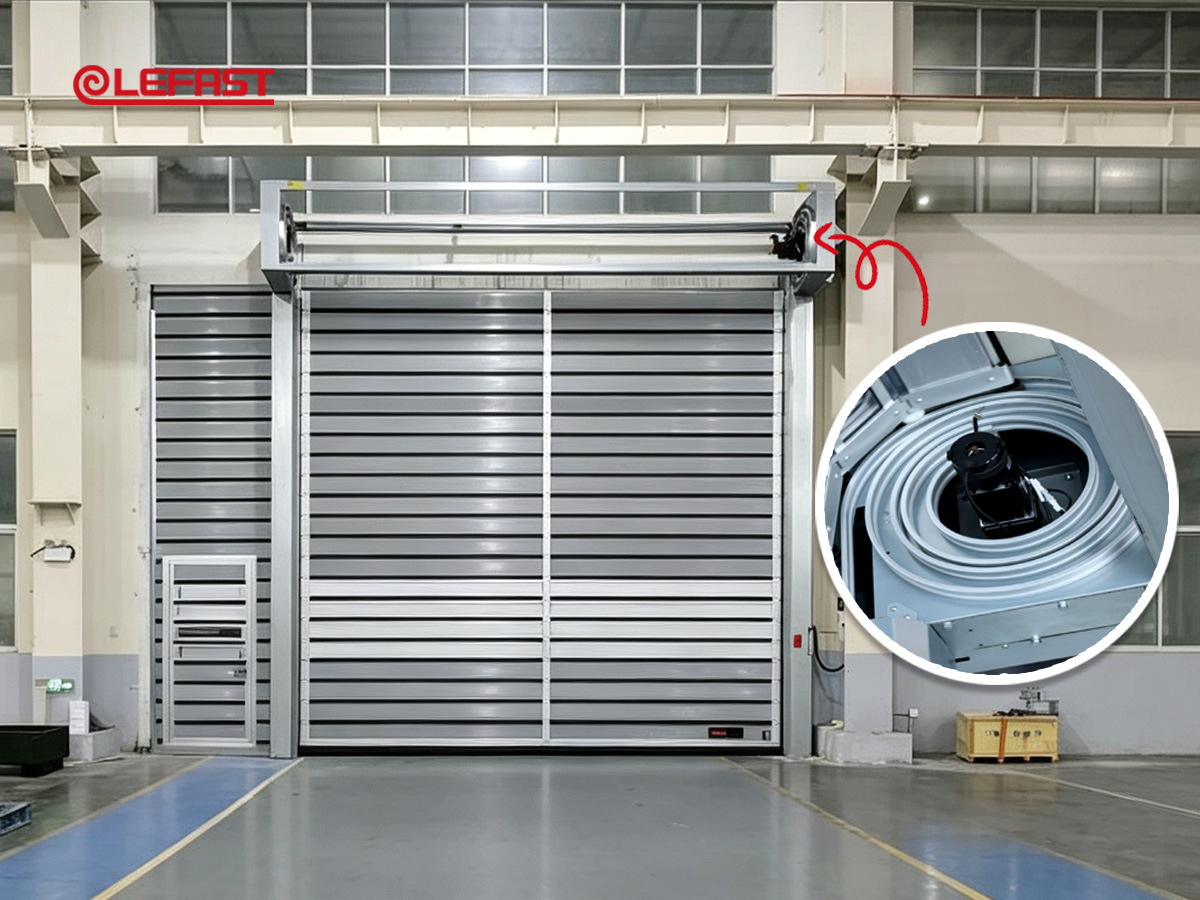
Table of Contents
- Introduction
- What Is a High Speed Spiral Door
- Where Are High Speed Spiral Doors Commonly Used
- Key Factors to Consider When Choosing a High Speed Spiral Door
- High Speed Spiral Door Selection Checklist
- Choosing Between Different High-Speed Door Types
- Is a High Speed Spiral Door the Right Choicefor your application
- Common Mistakes When Choosing a High Speed Spiral Door
- Project Information to Prepare Before Requesting a Quote
- Why Choose LeFast High Speed Spiral Doors?
- FAQ
- Conclusion
1. Introduction
Choosing the right high-speed spiral door is about more than selecting a fast industrial door. The right solution can improve operational efficiency, enhance workplace safety, reduce energy loss, and provide reliable long-term performance.
However, the best high-speed spiral door depends on the specific requirements of your facility. Factors such as the installation environment, opening size, traffic frequency, wind load, insulation needs, automation, and security all influence the final selection.
This guide explains the key factors to consider, helping you choose a high-speed spiral door that matches your operational needs and long-term business goals.
2. What Is a High Speed Spiral Door?
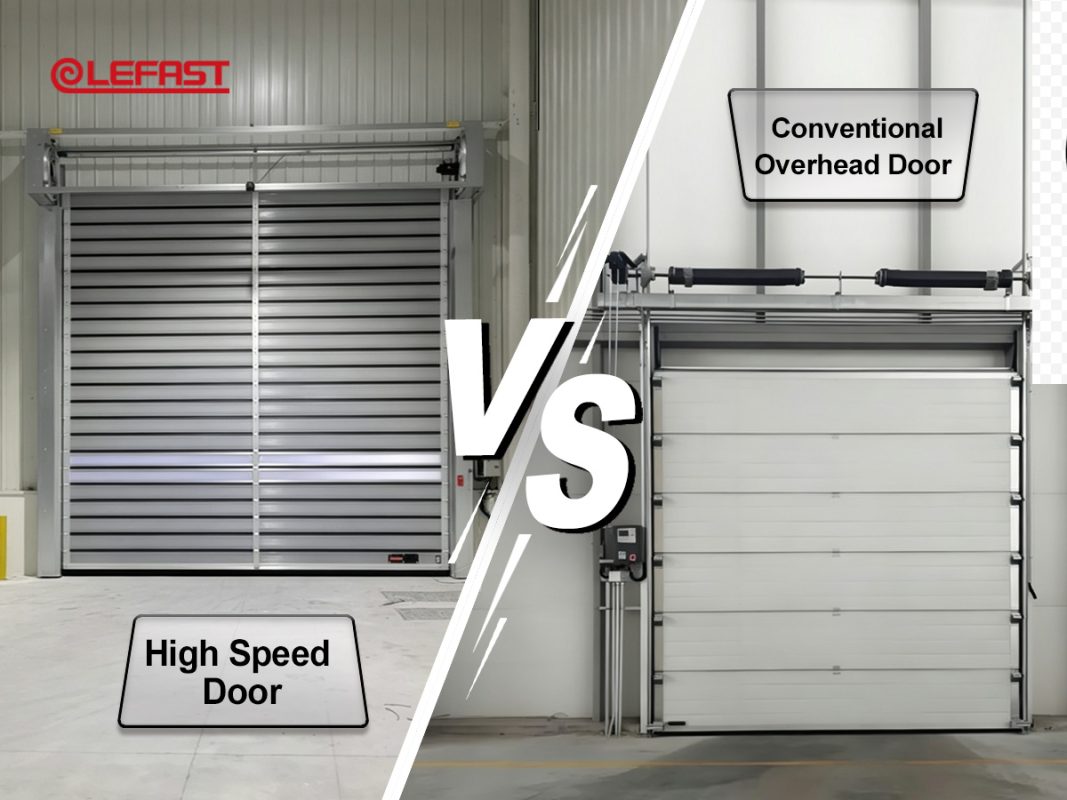
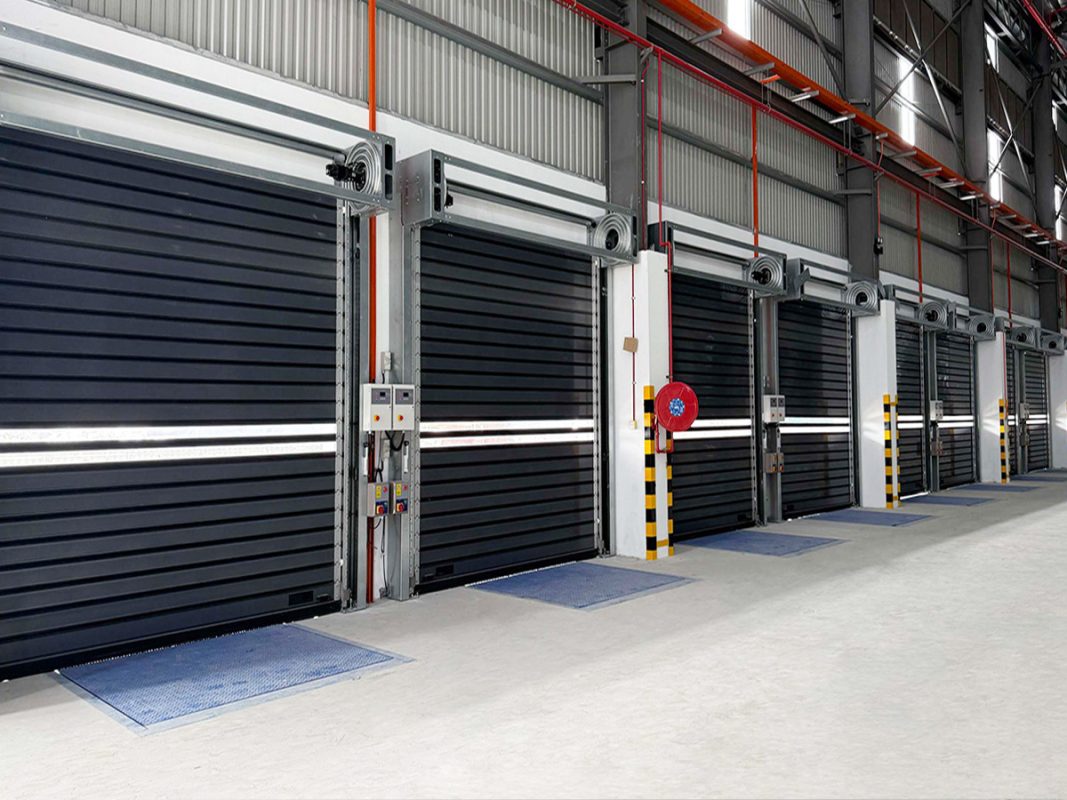
A high-speed spiral door is a aluminium-panel industrial door designed for high-frequency operation in demanding industrial environments. Unlike fabric high-speed doors, its insulated aluminum panels travel along a spiral track without contacting each other, reducing wear while ensuring smooth, stable operation.
Combining fast opening speeds with a robust structure, high-speed spiral doors provide excellent wind resistance, security, thermal insulation, and long-term durability. They are widely used for exterior entrances, logistics centers, warehouses, manufacturing plants, and other facilities where operational efficiency and reliability are essential.
For facilities with frequent forklift traffic, strict environmental control, or high daily operating cycles, a high-speed spiral door is often the preferred solution for improving both productivity and long-term operational performance.
3. Where Are High Speed Spiral Doors Commonly Used?
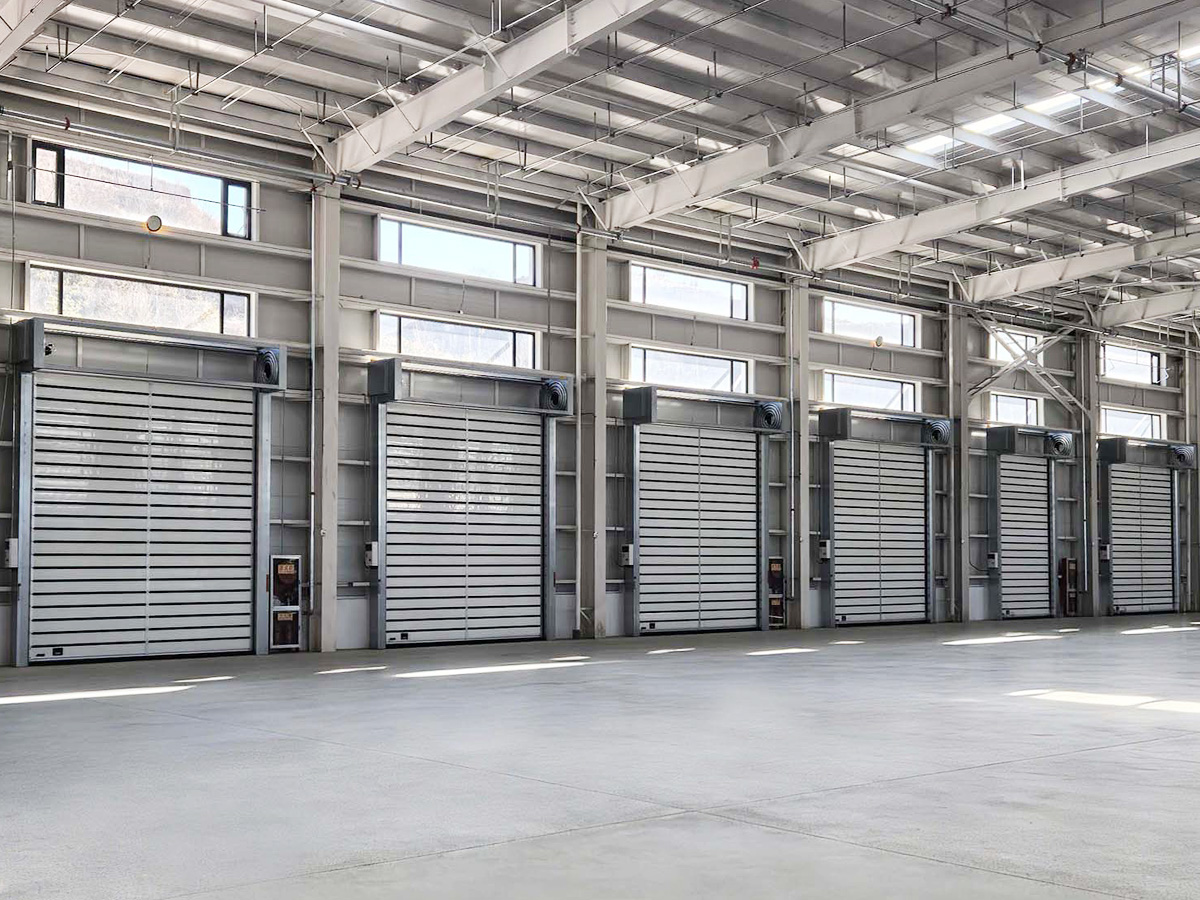
High-speed spiral doors are widely used in industrial facilities that require fast access, reliable operation, and long-term durability. They are particularly suitable for exterior openings and high-traffic areas where security, wind resistance, and operational efficiency are important.
Typical applications include:
- Warehouses– Improve forklift traffic flow and reduce waiting time.
- Logistics Centers– Support continuous vehicle movement and high daily operating cycles.
- Manufacturing Plants– Maintain efficient material flow between production areas.
- Automotive Facilities– Handle frequent vehicle and equipment traffic in demanding environments.
- Food Processing Facilities– Help improve environmental control and operational efficiency.
- Cold Storage Facilities– Reduce temperature loss when paired with insulated door panels.
- Commercial & Industrial Buildings– Provide a modern appearance with enhanced security and durability.
- Large Exterior Openings– Deliver stable performance in windy conditions with wind-resistant configurations.
Whether the priority is faster logistics, improved environmental control, or reliable operation under demanding conditions, selecting the right high-speed spiral door starts with understanding the application.
4. Key Factors to Consider When Choosing a High Speed Spiral Door
Selecting a high speed spiral door requires evaluating real application conditions rather than isolated specifications. Each factor directly influences structural design, performance stability, and lifecycle cost.
Application Environment
Indoor applications focus on efficiency and cycle frequency, while outdoor installations require wind resistance, sealing, and structural durability. Exterior conditions such as wind pressure, rain, and temperature variation must always be considered in system design.
Opening Size
Door dimensions determine structural load, motor torque, and system configuration.
LeFast offers different HSD series to support various industrial opening sizes:
Up to 4 m × 4 m (HSD23116 / HSD27150)
Up to 6 m × 7.5 m (HSD4322 / HSD6022)
Up to 8 m × 7.5 m (HSD6022)
Up to 10 m × 9–10 m (HSD8022 / HSD10022 / HSD4322Q)
Up to 12 m width × 10 m height (selected configurations)
Traffic Frequency
High-cycle environments such as logistics, production, and cold chain facilities require stable drive systems and wear-resistant structures. In such cases, reliability is more important than maximum speed.
Opening Speed
Typical speed range is 0.8–2.5 m/s. In real projects, a 6 m door can reach full opening in ~1 second (peak 5.88 m/s). Speed must always balance safety and structural load.
Wind Resistance
Wind load affects stability, sealing, and lifespan, especially for exterior doors. Reinforced configurations are recommended for high-wind environments where structural safety is critical.
Security Requirements
Security is defined by both access control and physical structure strength. Rigid-panel spiral doors provide higher impact resistance for sensitive or high-value areas.
Insulation & Energy Control
Thermal performance depends on panel thickness, sealing, and structural design. LeFast HSD panels range from 23 mm to 100 mm, with reinforced insulation options for cold chain applications.
Safety & Maintenance
Standard safety systems include infrared sensors, safety bottom edge, emergency release, and warning lights, with optional light curtain and radar systems for higher safety requirements.
Long-term performance depends on motor reliability, control system stability, and service accessibility.
A high speed spiral door is not selected by specifications alone, but by matching system design with real operating conditions. Proper selection ensures long-term stability, safety, and cost efficiency.
5. High Speed Spiral Door Selection Checklist
This section provides a structured engineering checklist to help match real project conditions with the correct high-speed spiral door configuration. It focuses on system-level decision factors rather than isolated specifications.
Core Selection Table
Selection Factor | What to Check | Engineering Impact |
Application Environment | Indoor / outdoor installation | Determines sealing system, wind resistance level, and structural reinforcement |
Opening Size | Width & height of the opening | Directly affects door structure class, motor torque, and wind load capacity |
Traffic Frequency | Daily operating cycles | Defines drive system durability and mechanical fatigue resistance |
Opening Speed | Required operating speed | Impacts logistics efficiency and workflow synchronization |
Wind Load | External wind conditions | Critical for outdoor safety and structural stability |
Security Level | Access control requirement | Determines door rigidity and anti-intrusion performance |
Temperature Control | Ambient / cold storage / insulated area | Affects insulation design and energy efficiency performance |
Safety System | Sensors, light curtain, emergency opening | Ensures operator and equipment protection in high-cycle use |
Control Method | Automation & access mode | Improves operational efficiency and system integration level |
Maintenance | Serviceability & spare parts access | Impacts downtime, lifecycle cost, and long-term reliability |
frequency influencing drive system selection.
Application environment and opening size are the primary structural drivers of system configuration. Traffic frequency and wind load determine mechanical durability requirements, while safety, control, and maintenance define long-term operational performance.
High-speed spiral door selection is a system-level decision. For example, larger openings increase wind load requirements, while higher traffic frequency directly influences drive system selection and structural fatigue resistance.
LeFast Recommendation
When multiple factors fall into high-demand conditions, the project should be treated as an engineered solution rather than a standard product selection. This ensures correct configuration from the early design stage.
This checklist is designed to support early-stage engineering decision-making and reduce selection risk before quotation and design confirmation.
6. Choosing Between Different High-Speed Door Types
In industrial projects, selecting a high-speed door is not about comparing isolated products, but about choosing the correct system architecture based on application requirements.
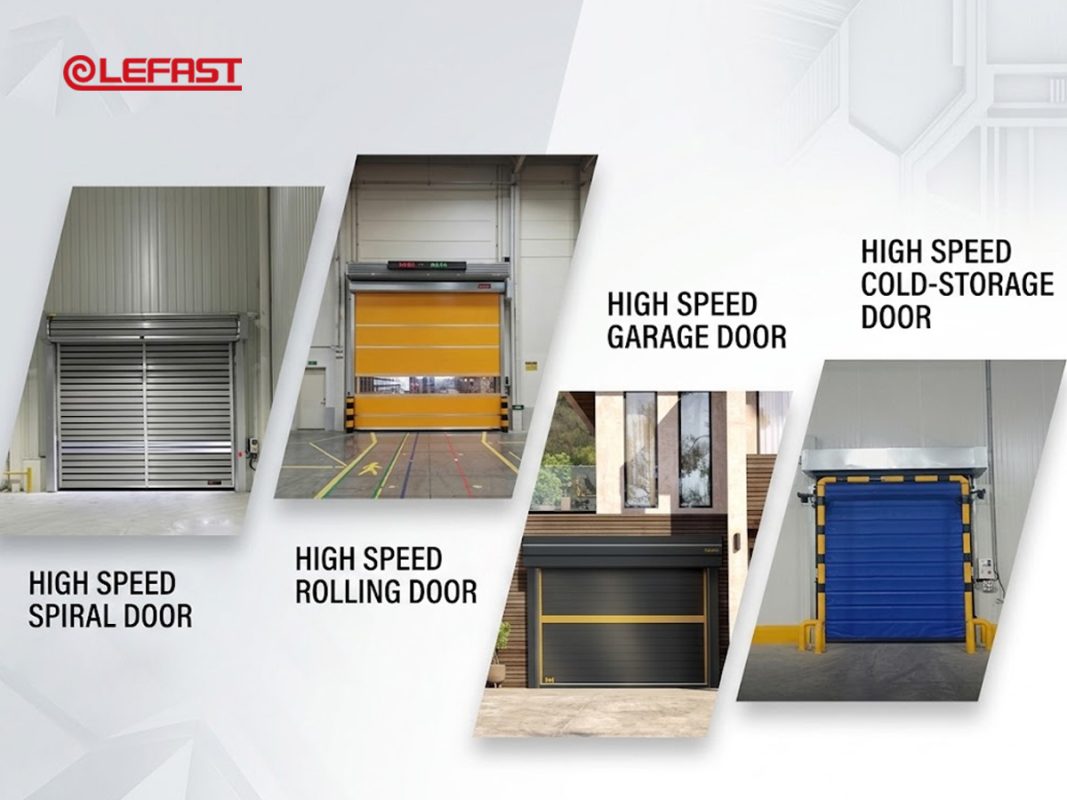
LeFast provides three main high-speed door systems, each designed for different industrial requirements and operating conditions.
System Comparison Table
| System Type | Structural Feature | Core Strength | Best Application |
| High Speed Spiral Door | Aluminum/steel panel + spiral track system | High strength, high wind resistance, high security | Heavy-duty industrial buildings, outdoor entrances |
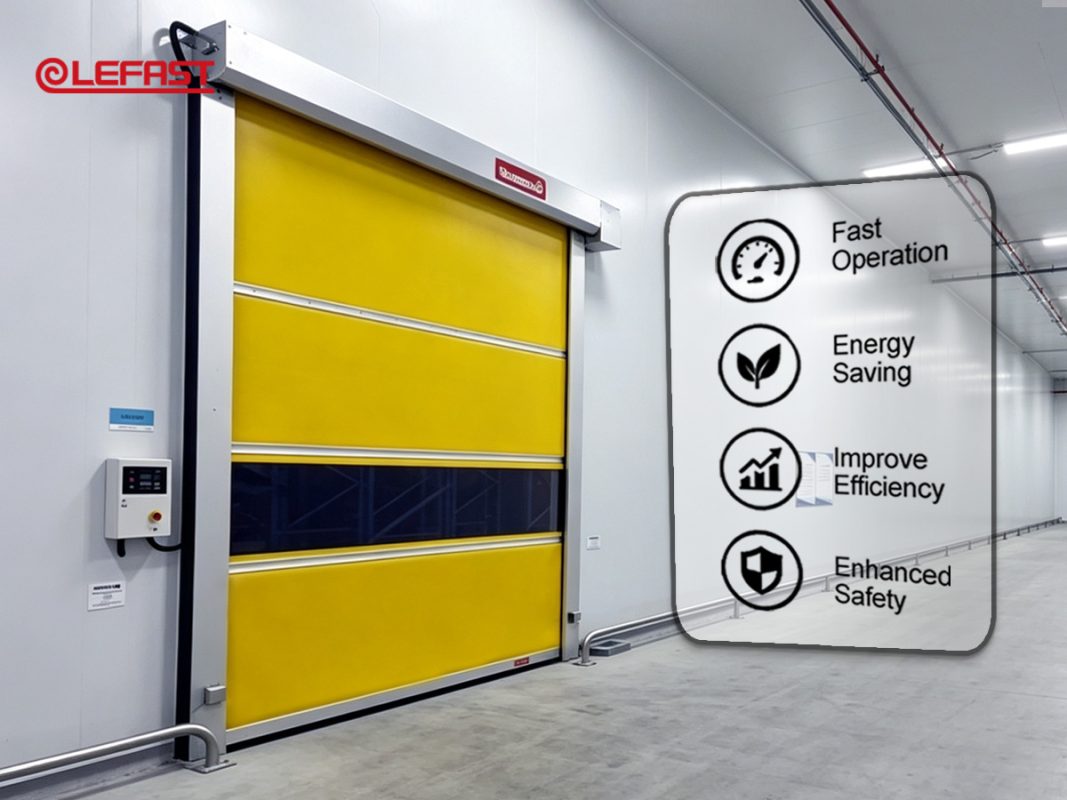
| High Speed Fabric Door System (Rolling / Folding / Self-Repaired) | Flexible PVC curtain structure with high-speed drive system | High speed, flexible installation, cost efficiency | Indoor logistics, workshops, partition areas |
| High Speed Cold Storage Door System | Thermally insulated structure optimized for low temperature environments | Energy saving, temperature stability, sealing performance | Cold storage, food & pharma environments |
High Speed Spiral Door System
Spiral door systems use aluminum panels running along a spiral track, forming a highly stable structural solution.
Key Features
- Highest structural rigidity Excellent wind resistance performance
- Strong wind and insulation resistance
- Stable operation under high-frequency use
This system represents LeFast’s core engineering capability in industrial door solutions.
LeFast Recommendation
Choose spiral door systems when structural strength, safety, and long-term durability are top priorities.
High Speed Fabric Door System
Fabric door systems use flexible PVC curtain materials combined with high-speed operating mechanisms.
Structural Configurations
High Speed Rolling Door
High-frequency indoor logistics and fast access
High Speed Self-Repaired Door
Automatic curtain reset after impact
High Speed Folding Door
Suitable for wider openings requiring moderate structural stability.
Key Advantages
- High opening and closing speed
- Flexible installation options
- Easy maintenance and replacement
LeFast Recommendation
Fabric door systems are best selected when operational efficiency, flexibility, and cost control are the main priorities.
High Speed Cold Storage Door System
Designed for low-temperature environments, focusing on insulation and energy efficiency.
Key Features
- High thermal insulation performance
- Reduced air leakage design
- Stable operation in low-temperature conditions
- Energy-saving system structure
LeFast Recommendation
Cold storage systems are ideal when temperature control and energy efficiency are critical.
High-speed door selection should always follow system-level thinking rather than product-level comparison.
Each system is optimized for a specific industrial requirement:
- Spiral → Structural strength & safety
- Fabric → Operational efficiency & flexibility
- Cold Storage → Thermal control & energy efficiency
Among all systems, the High Speed Spiral Door represents LeFast’s core technological strength and premium industrial solution.
7. Is a High Speed Spiral Door the Right Choice for Your Application?
Choosing the right industrial door is not about selecting the most advanced product—it is about selecting the solution that best matches your operating environment, performance requirements, and long-term investment goals.
A high speed spiral door is a durable and versatile solution designed for demanding industrial environments. However, its suitability depends on factors such as traffic frequency, installation conditions, environmental exposure, and investment priorities.
Applications Where High Speed Spiral Doors Are the Best Fit
| Application | Why It Fits |
| Automotive manufacturing | Frequent vehicle and forklift traffic requiring long-term reliability |
| Logistics & distribution centers | High operating efficiency with continuous daily cycles |
| Industrial buildings with exterior openings | Better wind resistance, sealing, and security |
| Food & pharmaceutical facilities | Improved environmental control and professional appearance |
| Modern warehouses | A balance of efficiency, durability, and building aesthetics |
When a High Speed Spiral Door Is the Right Choice
A spiral door is typically the preferred choice when multiple of the following requirements are present:
- High-frequency daily operation requiring stable performance
- Frequent forklift or vehicle passage
- Exterior installation requiring wind resistance and sealing
- Higher security and physical protection requirements
- Need for energy efficiency or temperature control
- Long service life and low downtime expectations
- Importance of modern building appearance
When Another High-Speed Door May Be a Better Choice
In some projects, alternative high-speed door systems may provide better cost efficiency or functional matching:
| Situation | Alternative Solution |
| Simple indoor separation | High speed rolling door (more economical) |
| Frequent accidental impacts | Self-repaired high speed door (reduces downtime) |
| Extra-wide indoor openings | High speed folding door (flexible structural design) |
| Budget-sensitive projects | Select system based on minimum required performance |
The best industrial door is not necessarily the one with the highest specifications—it is the one that best matches your application.
A high speed spiral door is ideal for high-frequency, high-demand environments requiring structural strength, security, wind resistance, and long-term reliability. For simpler applications, other high-speed door types may offer better cost efficiency.
8. Common Mistakes When Choosing a High Speed Spiral Door
Most issues in industrial door projects are not caused by product quality, but by incorrect selection during the early planning stage. Choosing the right high speed spiral door requires a clear understanding of application conditions rather than focusing on a single specification such as price or speed.
Common Mistakes vs Better Approach
Common Mistake | Better Approach |
Choosing based only on price | Evaluate total lifecycle cost, including maintenance and durability. |
Using an indoor door for exterior applications | Select a door designed for wind resistance and external conditions. |
Ignoring wind load requirements | Match door structure with local wind and installation environment. |
Not confirming full opening requirements | Provide complete opening data, including clear opening and installation space. |
Overlooking safety requirements | Select safety systems based on application risk and local standards. |
Ignoring traffic frequency | Choose a system designed for the actual daily operating cycles. |
Focusing only on initial cost | Consider long-term maintenance and spare parts availability. |
Insufficient sealing or insulation | Select insulated or high-sealing configurations when temperature control is required. |
A high speed spiral door should always be selected based on application conditions, not isolated specifications. A proper evaluation at the early stage helps ensure long-term performance, safety, and cost efficiency.
9. Information Needed Before Requesting a Quote
To receive an accurate quotation and a suitable technical proposal, it is important to provide complete project information at the early stage. This helps ensure the recommended high speed spiral door is correctly matched to the application requirements.
Key Information Required for Quotation
Required Information | Why It Matters |
Door opening width and height | Determines door model, structure design, and motor configuration. |
Installation type (indoor / outdoor) | Affects wind resistance, sealing, and panel selection. |
Daily operation frequency | Helps define motor duty cycle and system durability. |
Application environment | Ensures correct selection for logistics, industrial, or special environments. |
Wind resistance requirements | Important for exterior or high-wind installations. |
Temperature or insulation needs | Determines whether insulated panels or sealing upgrades are required. |
Safety system requirements | Defines configuration such as light curtain or infrared sensors. |
Control method preference | Options include push button, radar sensor, remote control, or access system. |
Site photos or drawings | Helps engineers verify installation conditions and structural feasibility. |
Power supply information | Ensures correct motor and control system configuration. |
Customization requirements | Includes special size, color, panel thickness, or integration needs. |
Providing complete project information at the quotation stage significantly reduces design revisions and ensures faster, more accurate technical proposals. In most industrial projects, incomplete data is the main reason for delayed or revised quotations.
A complete and accurate quotation is always based on complete project information. The more detailed the initial data provided, the more precise and efficient the proposed high speed spiral door solution will be.
10. Why Choose LeFast High Speed Spiral Doors?
LeFast provides high speed door systems for industrial and commercial facilities where reliability, safety, and continuous operation are essential. The focus is not only on product performance, but on delivering solutions that match real application requirements.
LeFast high speed spiral doors are designed for warehouse, factory, logistics, exterior entrance, and high-frequency industrial applications where stable operation is critical.
These systems are developed with consideration of real project requirements such as operating frequency, structural durability, sealing performance, wind resistance configuration, safety protection, and customized dimensions.
LeFast aims to provide long-term reliable door solutions that support efficient and safe operation in modern industrial environments.This makes LeFast a reliable partner for long-term industrial door projects worldwide.
11. FAQ
What is a high speed spiral door used for?
A high speed spiral door is used in industrial and commercial environments that require frequent opening, fast access, and controlled indoor conditions. It is commonly installed in warehouses, factories, logistics centers, and exterior entrances.
What is the difference between a spiral door and a rolling door?
A spiral door uses rigid panels that move along a spiral track, providing higher structural strength, better sealing, and improved wind resistance. A rolling door uses a flexible curtain, which is more economical but less rigid.
Can a high speed spiral door be used outdoors?
Yes. High speed spiral doors are commonly used for exterior applications. Wind-resistant configurations and insulated panels can be selected depending on site conditions.
What is the typical opening speed of a spiral door?
The typical opening speed ranges from 0.8 to 2.5 m/s depending on application requirements. For high-efficiency logistics environments, faster configurations may be used.
Are high speed spiral doors suitable for high traffic areas?
Yes. They are designed for high-frequency operation and are suitable for environments with frequent forklift or vehicle traffic.
What safety systems are available for spiral doors?
Standard safety systems include infrared sensors, safety bottom edge, and emergency manual release. Light curtains can also be added for higher safety requirements.
How do I choose the right high speed spiral door?
Selection depends on application environment, opening size, traffic frequency, wind load requirements, and insulation needs. A proper evaluation of these factors ensures the best system configuration.
12. Conclusion
Choosing the right high speed spiral door is a process of matching application requirements with the right technical configuration. Factors such as installation environment, door size, traffic frequency, wind load, safety requirements, and insulation needs all play an important role in the final decision.
A well-selected system improves efficiency, safety, and long-term operating stability in industrial facilities.
If you are planning a project or need technical support, LeFast can help you evaluate the most suitable high speed door solution based on your application requirements.