Uncategorized

What Is a High Speed Door? Common Types, Uses and Benefits

Table of Contents

  • Introduction
  • What Is a High-Speed Door?
  • Why High-Speed Doors Are Used
  • Main Types of High-Speed Doors
  • Common Uses of High Speed Doors
  • Industrial Applications
  • Key Functional Characteristics
  • Transition Section
  • How to Choose a High-Speed Door
  • Why LeFast
  • FAQ
  • Conclusion

1. Introduction

High-speed doors are widely used in industrial facilities such as warehouses, factories, logistics centers, and cold storage environments.

They are designed to improve operational efficiency, reduce waiting time, and support better environmental control in high-frequency traffic areas.

As modern industries move toward automation and higher workflow efficiency, high-speed doors have become an essential part of industrial access systems.

2. What Is a High Speed Door?

A high-speed door is a category of industrial doors designed for rapid opening and closing in environments requiring frequent and efficient access.

Operating speeds typically range from 0.8 to 2.5 m/s, depending on size, configuration, and application requirements.

Unlike conventional doors, high-speed doors use integrated systems including motors, sensors, and control units to support high-cycle industrial operation.

High-speed doors represent a product category that includes multiple configurations such as rolling systems, spiral structures, self-repairing designs, and cold storage solutions,each designed for specific industrial needs.

Their primary function is to support fast, safe, and efficient movement of goods, vehicles, and personnel in industrial environments.

3. How Does a High Speed Door Work?

A high-speed door operates through an integrated system consisting of a mechanical structure, a drive system, and a control unit.

It can be activated manually through push buttons or automatically through basic triggering devices such as radar, ground loops, or remote control systems.

The system is designed to enable fast and controlled opening and closing cycles in industrial environments with frequent access requirements.

4. Common Types of High Speed Doors

High-speed doors are available in several main configurations designed for different industrial applications and operating environments.

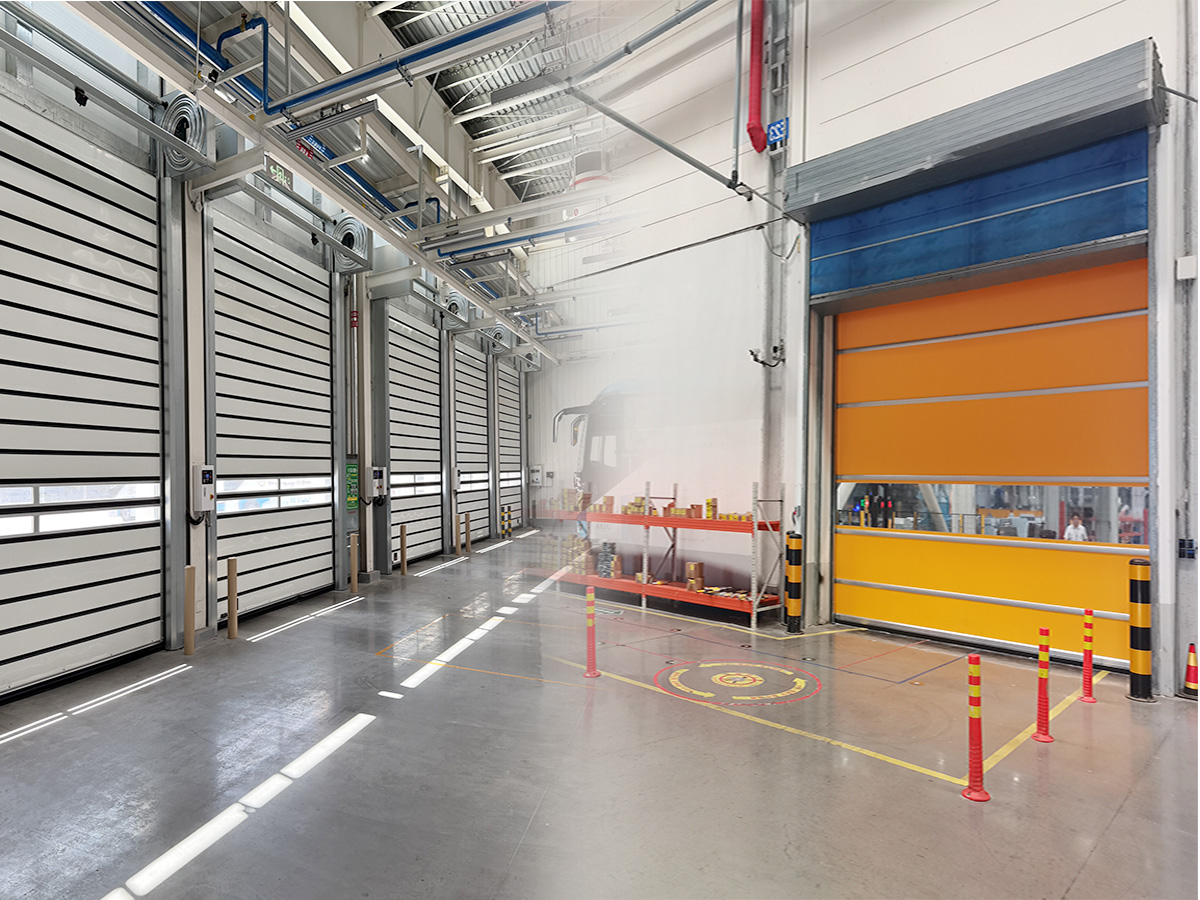
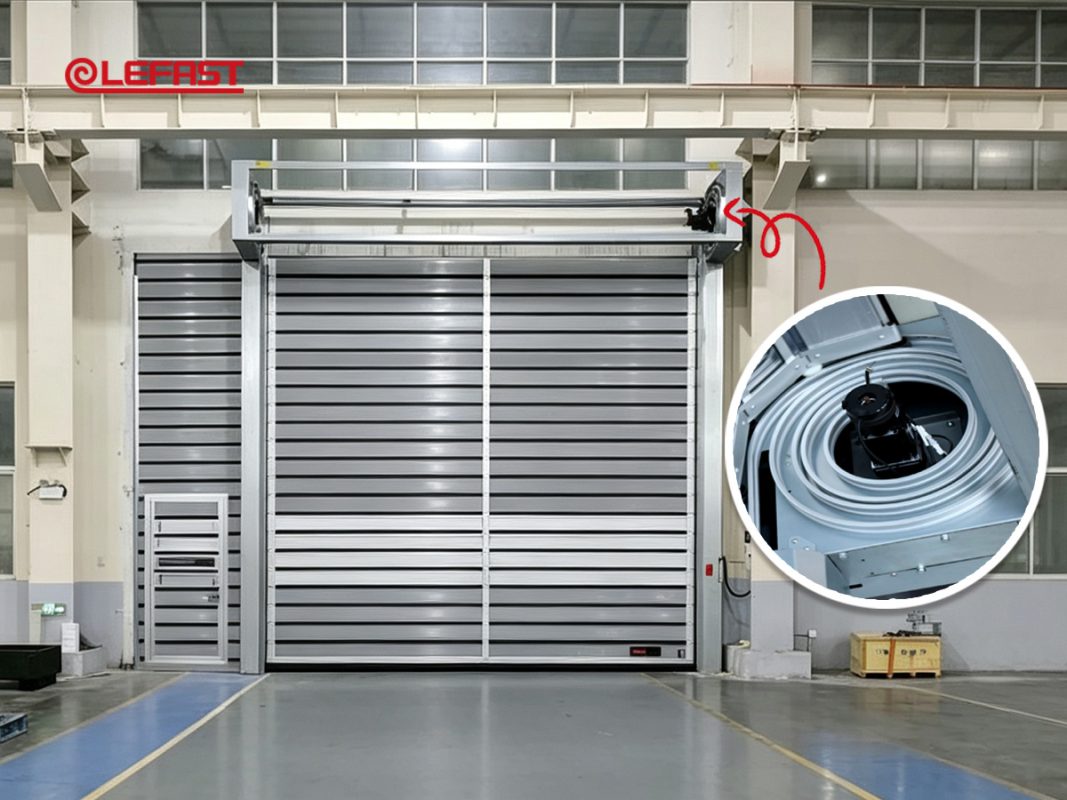
High-Speed Spiral Doors

Designed for exterior or high-performance industrial entrances requiring structural stability, durability, and frequent operation.

In certain applications, spiral doors can also be configured with enhanced wind resistance to meet demanding outdoor conditions.

High-Speed Rolling Doors

Suitable for general industrial environments such as warehouses, logistics centers,clean rooms and internal production areas with frequent traffic flow.

Some rolling doors can be designed with folding or stacking curtain structures to adapt to larger openings or specific installation requirements.

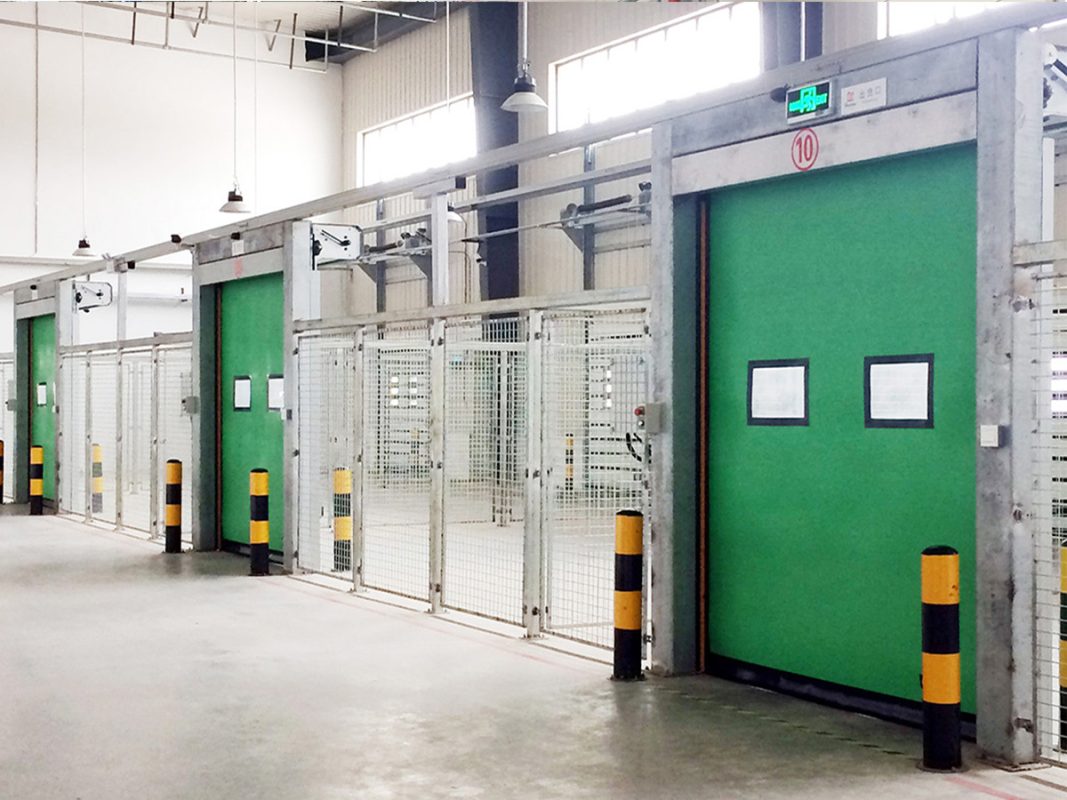
Self-Repairing High-Speed Doors

Used in environments where accidental impact may occur, allowing the door curtain to automatically reset after displacement to reduce downtime.

Cold Storage High-Speed Doors

Designed for temperature-controlled environments such as cold rooms and freezer facilities, helping maintain internal temperature stability during frequent access.

5. Common Uses of High Speed Doors

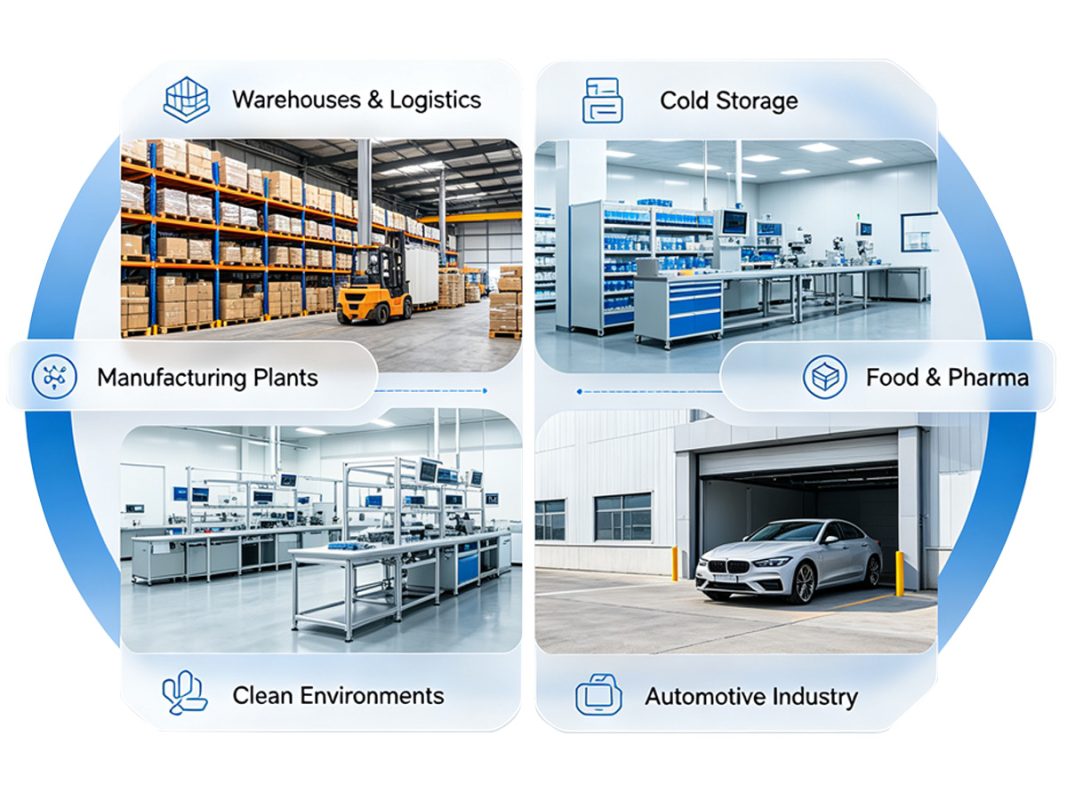
High-speed doors are used across a wide range of industrial environments where fast access, controlled operation, and efficient workflow management are required.

They are typically applied in facilities with frequent movement of goods, vehicles, and personnel, especially where operational efficiency and environmental stability are important.

Warehouses & Logistics Centers

Used at loading docks and internal access points to support high-frequency forklift and cargo movement.

Manufacturing Plants

Applied in production zones to improve workflow efficiency and reduce unnecessary waiting time between processes.

Cold Storage Facilities

Used in temperature-controlled environments to help maintain stable internal conditions during frequent opening cycles.

Food & Pharmaceutical Facilities

Applied in clean and controlled environments where hygiene, temperature stability, and operational safety are required.

Clean Industrial Environments

Used in controlled production areas where reduced air exchange and operational consistency are important.

Automotive & Heavy Industry

Applied in high-traffic industrial entrances where durability, speed, and continuous operation are required.

6. Main Benefits of High Speed Doors

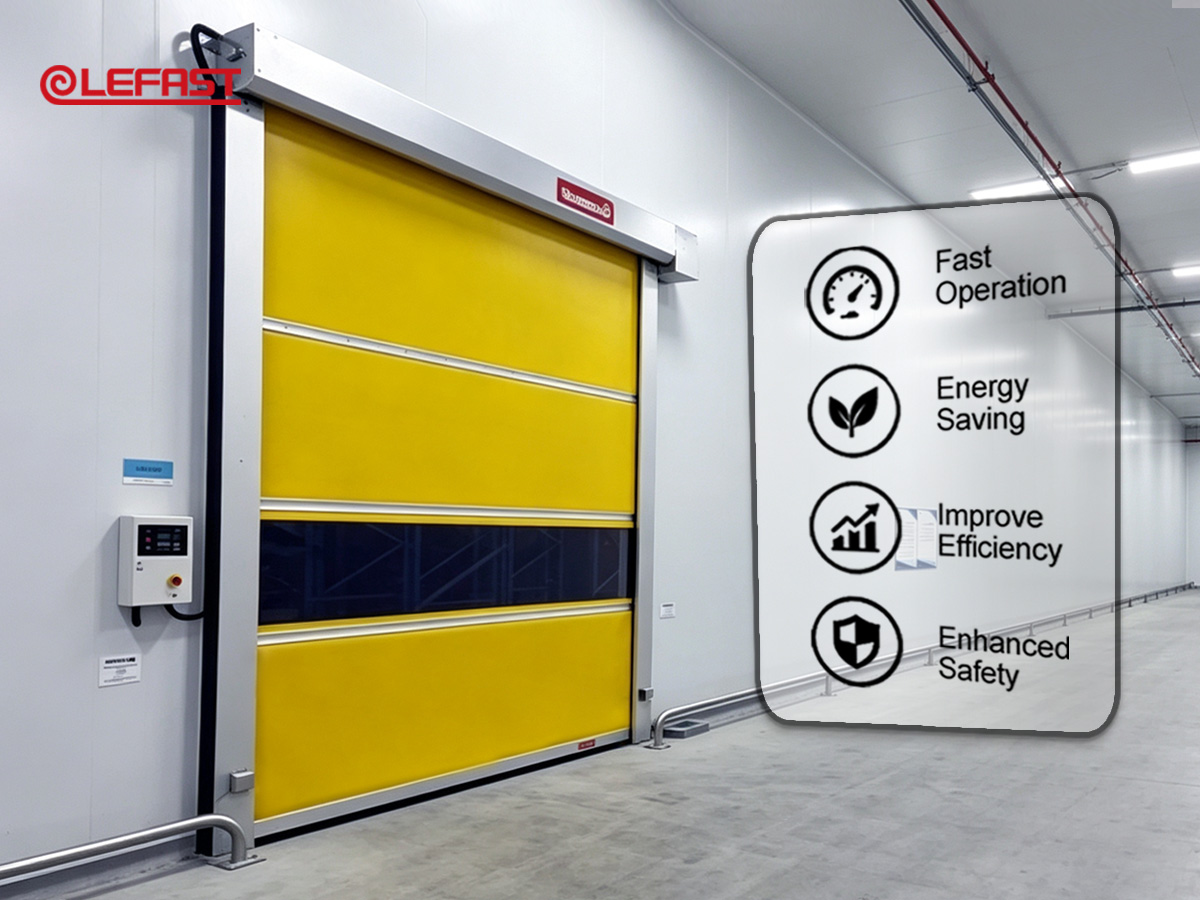
High-speed doors deliver key operational benefits in industrial environments where efficiency, safety, and environmental stability are important.

They are designed to improve workflow performance by reducing unnecessary waiting time and supporting more consistent daily operations.

Faster Traffic Flow

Rapid opening and closing cycles help reduce delays for forklifts, vehicles, and personnel in high-frequency access areas.

Energy Efficiency

Shorter door open times help reduce air exchange between indoor and outdoor environments, supporting better energy control.

Environmental Stability

They help maintain more stable indoor conditions in temperature-sensitive environments such as cold storage and clean areas.

Operational Safety

Integrated sensing systems support safer operation in busy areas with frequent movement of people and equipment.

Reduced Operational Interruptions

Stable high-cycle performance helps maintain continuous workflow and reduces disruptions caused by frequent door usage.

7. High Speed Doors vs Traditional Industrial Doors

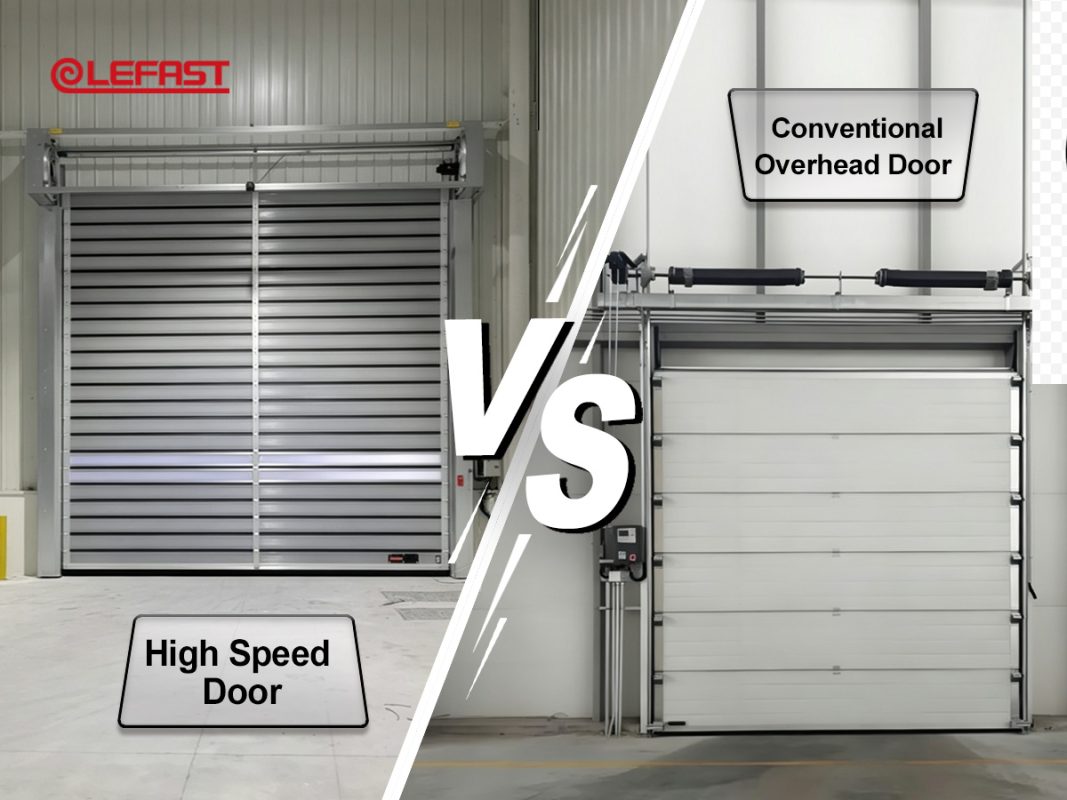
High-speed doors and traditional industrial doors serve different operational needs and are selected based on application requirements rather than performance competition.

Traditional industrial doors, such as sectional overhead doors, are typically used in low-traffic areas where opening frequency is limited and speed is not a critical factor.

High-speed doors, on the other hand, are designed for environments that require frequent access, faster operation, and better control of environmental conditions.

The choice between the two depends on factors such as traffic frequency, operational efficiency requirements, and environmental control needs.

8. How to Choose the Right High Speed Door

Selecting the right high-speed door depends on a combination of operational, environmental, and system integration requirements.

The goal is to ensure the door matches the real working conditions of the facility, rather than focusing on a single product feature.

Traffic Frequency

Facilities with high daily door cycles require solutions designed for frequent and continuous operation to maintain workflow efficiency.

Indoor or Outdoor Application

External entrances may require consideration of wind load and structural stability, while internal openings focus more on speed and efficiency.

Environmental Control Requirements

Temperature-sensitive areas such as cold storage or controlled production zones require stronger sealing and stable environmental performance.

Automation Integration

Modern facilities may require compatibility with automation systems such as production lines, AGV systems, or smart factory controls.

Safety Requirements

Different working environments may require different levels of sensing and safety configuration based on personnel and equipment movement.

Maintenance Expectations

Operational stability and acceptable maintenance frequency should be considered to ensure long-term reliability and reduced downtime.

Budget and Lifecycle Cost

Selection should balance initial investment with long-term operating efficiency, maintenance needs, and overall lifecycle cost.

9. Why Choose LeFast High Speed Doors?

efficiency, durability, and reliable operational performance.

With a focus on system-based door solutions, LeFast supports a wide range of applications across warehouses, manufacturing facilities, logistics centers, and temperature-controlled environments.

Product Portfolio

LeFast offers multiple high-speed door configurations to meet different industrial needs:

  • High-Speed Spiral Doors
  • High-Speed Rolling Doors
  • Self-Repairing High-Speed Doors
  • Cold Storage High-Speed Doors
Application Coverage

These solutions are widely used in industries such as logistics, automotive, food processing, pharmaceuticals, clean environments, and heavy industrial facilities.

System Capability

LeFast doors are designed to support fast operation, stable performance, and integration with modern industrial workflows.

10. FAQ

What is a high-speed door?

A high-speed door is an industrial door designed for rapid opening and closing to improve efficiency and control in high-frequency access environments.

What are high-speed doors used for?

They are used in warehouses, logistics centers, factories, cold storage facilities, and other industrial environments requiring fast and controlled access.

What are the main types of high-speed doors?

Common types include rolling doors, spiral doors, self-repairing doors, cold storage doors, and wind-resistant configurations.

Are high-speed doors suitable for warehouses?

Yes. They are widely used in warehouses to improve traffic flow, reduce waiting time, and support efficient forklift operations.

Do high-speed doors help reduce energy loss?

Yes. By reducing door open time, they help minimize air exchange between indoor and outdoor environments.

What is the difference between a high-speed rolling door and a high-speed spiral door?

Rolling doors are commonly used for general industrial access, while spiral doors are designed for more demanding environments requiring higher structural stability and durability.

Which high-speed door is suitable for cold storage?

Cold storage high-speed doors are specifically designed to maintain stable temperature conditions in refrigerated and freezer environments.

How do I choose the right high-speed door?

Selection depends on traffic frequency, environment type, safety requirements, automation needs, and long-term operational cost considerations.

11. Conclusion

High-speed doors are designed to improve efficiency, safety, and environmental control in industrial facilities with frequent access requirements.

They are widely used across warehouses, factories, logistics centers, and temperature-controlled environments where operational performance is critical.

Compared with traditional industrial doors, high-speed doors offer a more effective solution for high-frequency and productivity-driven applications.

Selecting the right system depends on understanding the real operational needs of each facility.

For tailored recommendations, LeFast provides high-speed door solutions designed for different industrial applications and working conditions.

Leave a Reply

Your email address will not be published. Required fields are marked *