




Blog
How to Choose high speed doors for Controlled Industrial Environments: Drying Rooms and Clean Production Areas

Introduction
Choosing high speed doors for controlled industrial environments based on the production conditions and the performance requirements.
In drying rooms, priorities in high speed industrial doors include thermal insulation, sealing, temperature resistance and automation. In clean production areas, the door selection depends on cleanliness requirements, area separation and personnel or material flow. LEFAST provides customized solutions using high-speed spiral doors and high speed fabric doors to meet these different requirements.
1. How to Choose high speed doors for Drying Rooms?
1.1 Temperature Conditions and Heat Retention
Drying rooms need to maintain a stable operating temperature. Door insulation and perimeter sealing help reduce heat loss during daily operation. The high speed door structure and its main components should also be suitable for the room's working temperature.
1.2 Frequent Access and Automation Requirements
Many drying facilities use AGVs, RGVs or conveyor systems to move materials. high speed doors need to match the traffic frequency and integrate with the equipment's operating signals to support automated access.
1.3 Installation Conditions and Door Configuration
Roof structures, ventilation ducts, pipes and nearby equipment can restrict installation space. Door configuration and installation layout should be adapted to the available space without obstructing material handling routes.
2. How to Choose high speed doors for Clean Production Areas?
2.1 Area Separation and Traffic Flow
Personnel and materials moving between production zones can affect the cleanliness of the surrounding environment. Doors should provide reliable separation without slowing down daily operations. Where access involves air showers, production lines or automated material handling, the door operation may also need to coordinate with other equipment.
2.2 Cleaning and Maintenance Requirements
The door should suit the cleaning procedures and maintenance conditions of the production area. Surface materials, door structure and accessible components should be considered alongside the site's hygiene requirements. Specific cleanroom standards must also be checked against the project specifications.
2.3 Choosing the Right Door Construction
Both high-speed fabric door and high-speed spiral door can be considered for clean production areas, depending on the application.
Fabric doors are commonly used for frequent personnel and material access between internal production zones. Spiral doors may be more suitable where the application also requires a rigid door structure, better thermal separation or other specific performance characteristics.
3. Which Is the Better Choice: Spiral Doors vs. Fabric Doors?
| factor | High-Speed Spiral Door | High-Speed Fabric Door |
|---|---|---|
| Door construction | Rigid insulated panels | Flexible curtain |
| Thermal insulation | Insulated panel construction | Depends on curtain construction and configuration |
| Structural requirements | Rigid door structure | Flexible door structure |
| Installation | Requires space for the spiral track and door assembly | Generally more compact |
| Typical applications and selection factors | External openings and internal areas requiring thermal insulation, sealing and wind resistance. Model selection depends on opening size, temperature difference, wind exposure and operating conditions. | Mainly used for internal openings between production areas, where frequent personnel or material access is required. Consider traffic frequency, separation requirements, Selection depends on traffic frequency, separation requirements and cleaning conditions. |
4. How does LEFAST Develop a High-Speed Door Solution for Each Project?
LEFAST supplies high performance doors solutions according to site conditions, operating requirements and automation needs.
4.1 Customized Installation for Restricted Spaces
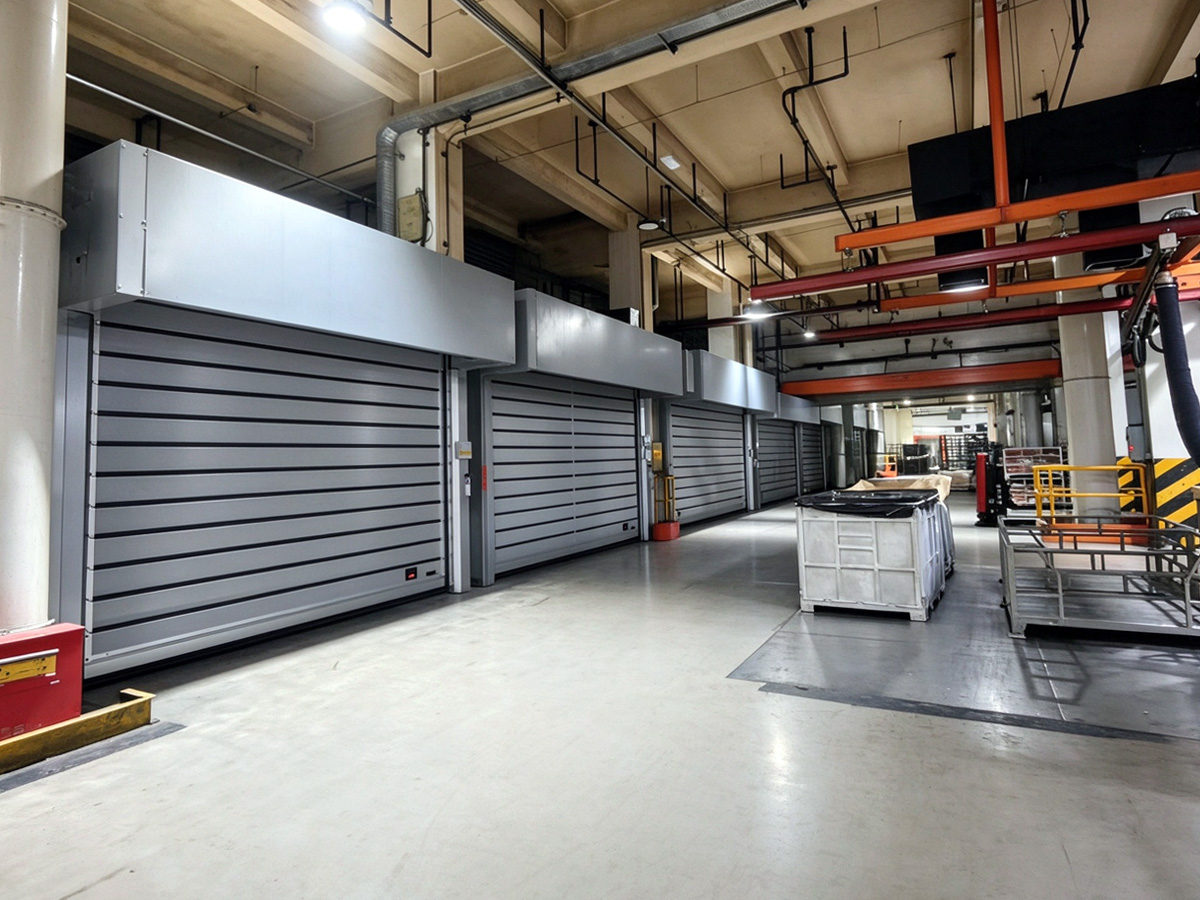
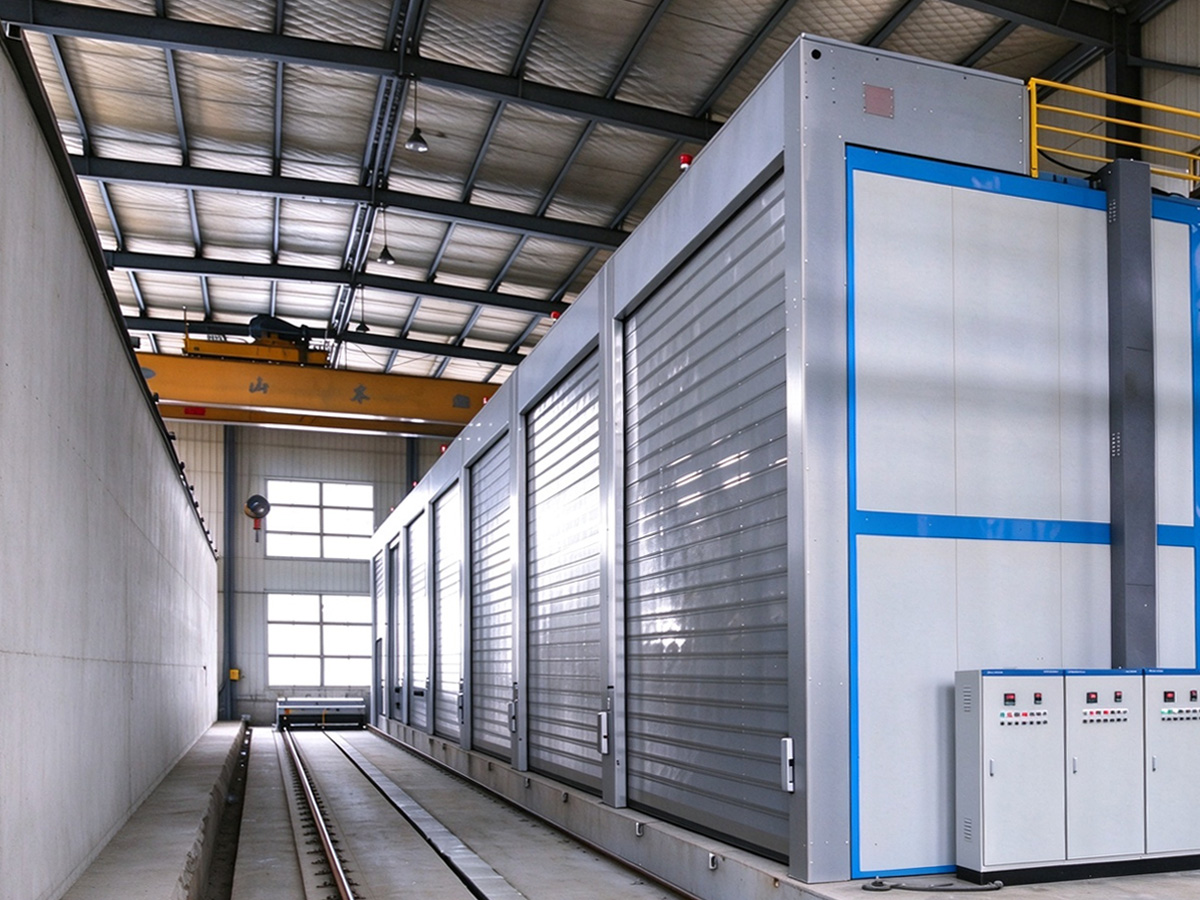
In a cable factory, the customer build 2 rows of new drying room inside the workshop, with an RGV track running between them. Each row consisted of seven drying rooms, operating at approximately 60°C. The large space between the drying room roofs and the workshop ceiling provided an opportunity for a customized installation layout.
LEFAST selected the HSD6022 insulated high speed industrial doors to provide thermal separation and perimeter sealing for the drying rooms, while supporting automated access through RGV integration. The header of the spiral door was installed reverse-mounted above the drying room roof to make better use of the available overhead space and maintain a clean workshop appearance,
4.2 Upgrading Insulated Doors in High-Temperature Drying Rooms
In drying rooms operating at 60–70°C, poor door sealing and slow operation can cause heat loss, especially with frequent AGV traffic.
A tire factory faced these problems with its existing insulated rolling doors, which lacked panel and perimeter seals and could not meet the factory's automation requirements. LEFAST replaced them with HSD8022 high speed spiral doors.
The thermal-break panels with 80mm thickness, feature double aluminium skins and a flame-retardant polyurethane foam core. Bidirectional panel seals, flocked side seals and EPDM top and bottom seals provide effective insulation and perimeter sealing.
For AGV integration, signal lines connect directly to the door control box. The door opens when an AGV reaches a preset position and closes automatically after it passes. Infrared sensors and a safety airbag provide obstruction protection, with manual emergency opening available during power failure.
The original opening dimensions were retained, with the surrounding structure reinforced. Installation was scheduled around production gaps to avoid interrupting operations.
4.3 Interlocked Doors for Controlled Personnel Access
Personnel entering a warehouse through a spray room need to complete the cleaning process before accessing the next area. This requires coordinated control of personnel access, door operation and spraying, with the two doors operating in sequence.
For a membrane material facility, LEFAST provided two interlocked high speed roll up doors with fingerprint access control and automatic spray integration. Personnel enter through the first door after fingerprint verification. Five seconds later, the first door closes and spraying starts. After spraying is completed, a further five-second delay opens the second door for access to the warehouse.The delay settings can be adjusted to suit the site's operating process, providing a controlled access sequence without requiring manual operation of each step.
4.4 Automated Material Handling in Food Production
In food production facilities, door access needs to keep pace with automated material handling, while door construction must also account for food safety requirements.
For a vitamin C production facility, LEFAST supplied 24 HSD4322 high-speed spiral doors integrated with the AGV system, supporting automated material movement between production areas. Stainless steel was selected for the door columns, covers and other accessories to meet the project's food safety requirements.
5. What Should a Door Supplier Check Before Recommending a Model?
5.1 What Information Is Needed Before Recommending a High-Speed Door?
Before recommending high speed doors, a supplier needs the following information:
Application and site conditions: Installation location, operating environment and any specific requirements.
Opening and building conditions: Opening dimensions, available installation space, surrounding obstacles and building structure.
Traffic and operation: Pedestrian, forklift, AGV/RGV or conveyor access, traffic frequency and operating cycles.
Control and power supply: Available power, control signals and interfaces with existing automation systems.
Installation requirements: Mounting method, site access and any restrictions affecting installation.
For an initial assessment, site photos, videos, opening dimensions and basic technical details are usually sufficient. For projects with unusual site conditions, multiple doors or complex traffic arrangements, an on-site survey would be better.
5.2 Common Specification Mistakes to Avoid
Opening dimensions without installation clearance: The available headroom, side room and mounting space may limit the choice of door construction or reduce the clear opening.
Panel thickness as the sole insulation reference: Overall insulation depends on the complete door construction, including panel joints and perimeter sealing.
Opening speed without considering traffic flow: The required operating cycle depends on traffic frequency, production rhythm and access arrangements.
Incomplete automation requirements: Missing details about control interfaces, trigger positions or opening and closing logic can complicate AGV and production line integration.
Material selection without considering site conditions: Door materials and finishes may not be suitable for the cleaning methods or environmental conditions in the facility.
6. FAQ
What type of high-speed door is best for a heated drying room?
An insulated high speed spiral door may be suitable where temperature separation and a larger opening are required, while the installation layout can influence the choice of door construction and track arrangement. The operating temperature and actual site conditions remain decisive.
Can high-speed fabric doors work in clean workshops?
Yes. High speed fabric doors can be used in clean workshops when the curtain material, high speed roll up doors construction and sealing performance meet the requirements of the process. However, their suitability for a particular cleanroom classification must be assessed separately.
How can high speed doors integrate with air showers?
high speed doors can be connected to an air shower control system through interlocking and sequence control. In LEFAST's HSR6000 rapid roll doors project, fingerprint access was connected to two interlocked doors and the air shower system. After personnel enter, the first door closes and the air shower starts. Once the cleaning cycle is complete, the second door opens to allow access to the next area. The timing is set according to the customer's operating requirements.access with the cleaning cycle.
What Details Should Be Shared for a Dry-Room Door Quotation?
For an initial quotation, the main details include the temperature, opening dimensions, available installation space and expected traffic. Information about AGV or other automation systems is also useful where applicable. Site photos, videos and drawings help the supplier assess the installation conditions and identify any special requirements before recommending a suitable high speed overhead door model.
Can high speed overhead door be customized for specific site conditions?
Yes. Customization can cover door dimensions. Installation orientation, track layout, head assembly position, control integration and accessory materials can also be adapted to project requirements. This is particularly relevant when existing structures, overhead equipment or automated traffic routes restrict standard installation arrangements.
Conclusion
Choosing the right high-speed door for controlled environment requires a clear understanding of the operating environment, installation conditions and access requirements. The door construction and configuration should fit the actual application.
Share your project details with LEFAST. Our team can help assess the site conditions and recommend a suitable door solution.