




Blog
How to Choose a Reliable High Speed Door Manufacturer

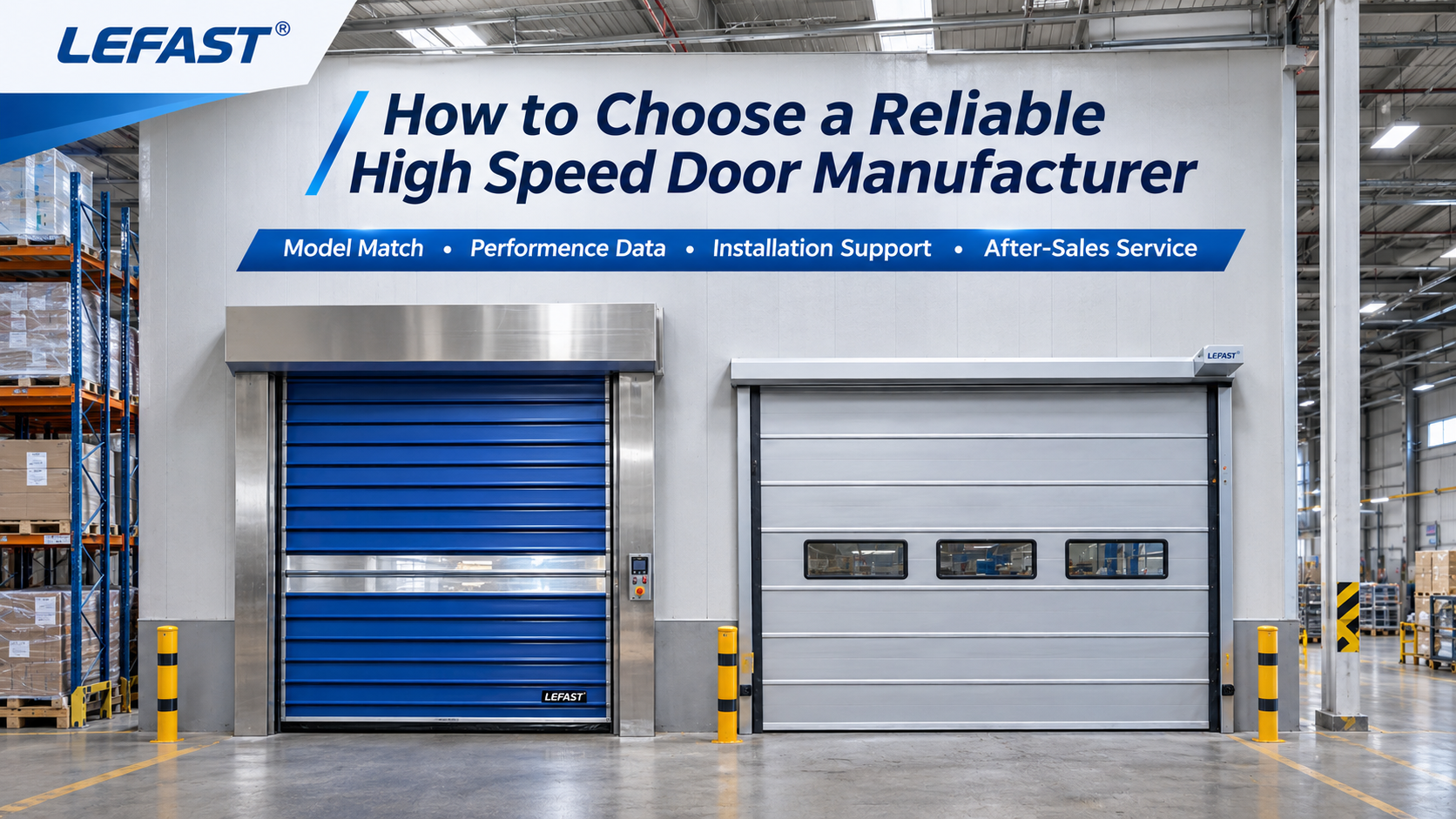
Quick Answer: Choose a manufacturer that can match a specific door model to the opening, document its performance and safety configuration, provide installation drawings, and explain how service and spare parts will be handled. Compare proposals using the same site requirements and written criteria. A broad product range or a low quote alone does not show whether a door will suit the application.
Confirm who will design, build, and support the door
Searches for high speed doors manufacturers can return direct manufacturers, distributors, installers, and companies combining these roles. Ask each supplier to identify which company designs the door, where it is manufactured, who performs final inspection, and who is responsible for installation, commissioning, warranty service, and replacement parts.
These responsibilities may sit with different companies. That can work well when roles are clear, but unclear handoffs can delay engineering approvals or repairs. Request the legal company name on the quotation, the manufacturing location, and the name of the service contact for the project.
When considering a china high speed spiral door manufacturer, review the same technical information as for any other manufacturer. Also document shipping terms, import responsibilities, the installation partner, electrical configuration, spare-parts availability, and how technical issues will be handled after delivery. Country of origin does not establish product quality or service capability; evidence and written responsibilities do.
Match the door type to the opening
A reliable manufacturer should ask about the application before recommending a model. The opening’s location, dimensions, traffic, temperature, wind exposure, and available mounting space can change the suitable construction and controls.
| Application condition | What to evaluate |
|---|---|
| Frequent interior traffic | Operating cycles, speed at the specified size, visibility, activation method, and impact response. |
| Exterior or wind-exposed opening | Wind-load documentation, panel or curtain construction, guides, anchoring, and building support. |
| Cold room or freezer access | Operating temperature, seals, condensation control, heated guides where needed, and defrost-cycle compatibility. |
| Large or constrained opening | Door dimensions, clear opening, headroom, side room, mounting depth, motor position, and structural requirements. |
Compare construction, not just product names
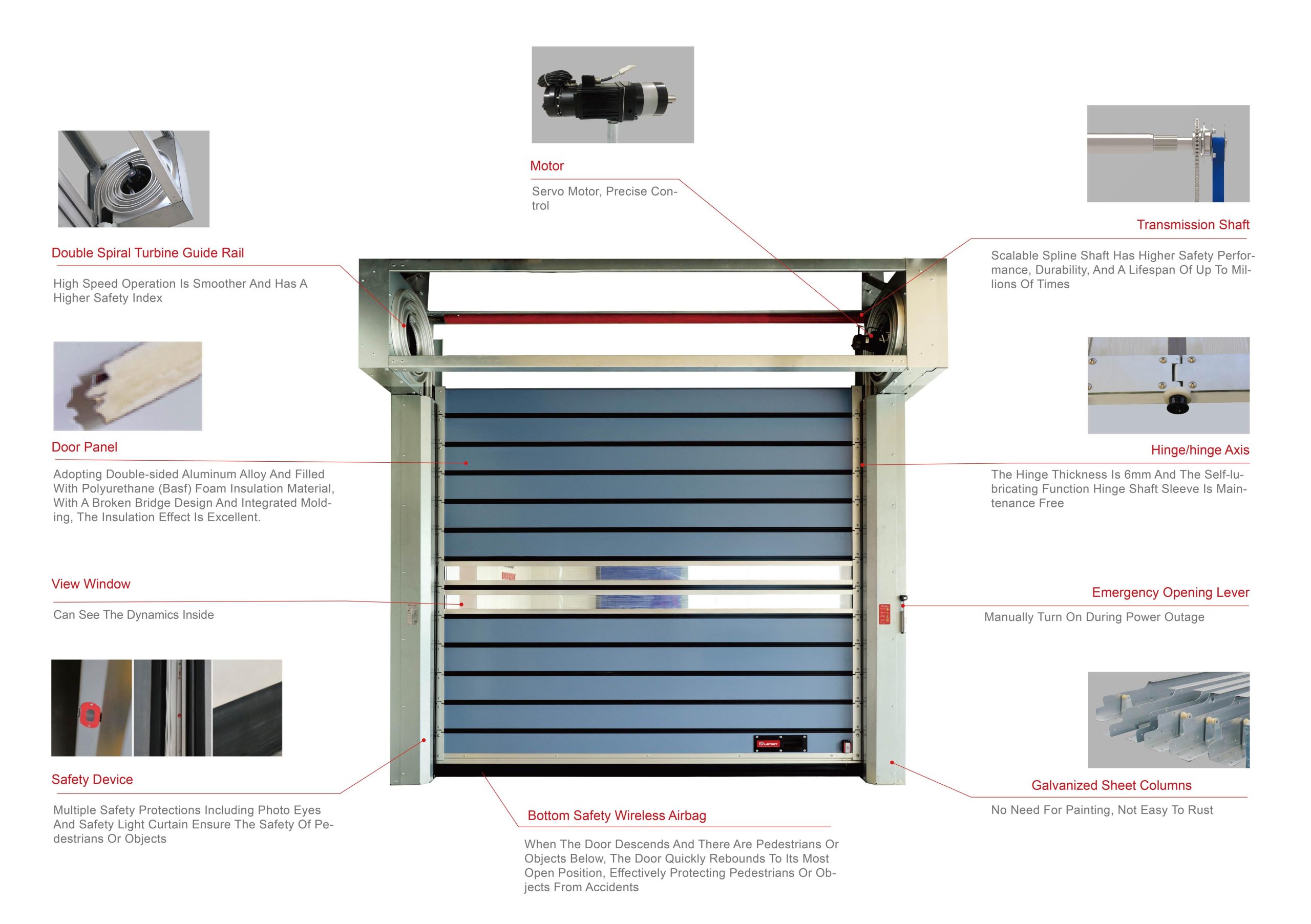
A high speed spiral door uses rigid panels guided through a spiral track. A flexible curtain door follows a different path and may use roll-up, zipper, or self-resetting designs. Product labels vary between manufacturers, so compare drawings and specifications rather than assuming similar names describe identical construction.
For high speed fabric doors, confirm the curtain material, guide system, sensing devices, and what happens after accidental contact. “Self-repairing” usually describes a curtain that can re-enter its guides after coming out; it does not mean damaged material repairs itself or that a collision causes no damage.
High speed cold storage doors need model-specific temperature and sealing information. A general “cold storage” label does not confirm performance in a particular freezer or chilled room. Request the supported temperature range and details on seals, heaters, condensation, and controls for the quoted configuration.
Request model-specific performance evidence
Ask for the exact model and configuration proposed for the measured opening. Published maximum speed, size range, or cycle claims may apply only to certain dimensions or conditions. Confirm opening and closing speeds separately, and ask whether quoted figures apply to the specified size.
For each proposal, request:
- Door construction, materials, finishes, and clear dimensions.
- Opening and closing speeds for the proposed size.
- Cycle-life information, if the application requires a rated life.
- Wind-load, air-leakage, insulation, or temperature data where relevant.
- Motor and control information, including power requirements and interfaces.
- Operating and maintenance instructions, wiring diagrams, and safety-device details.
DASMA’s guide specification for high-performance doors lists product data such as construction, dimensions, operating and maintenance information, and motor and control details. It also calls for shop drawings with actual dimensions, anchoring information, installation details, and wiring diagrams. Use it as a specification checklist; the document itself says to follow manufacturer instructions and applicable local regulations.
Terms such as “high speed,” “high cycle,” and “high performance” may not be used identically across product catalogs. DASMA’s terminology sheet notes that industry terms can vary. For a clear comparison, place the required speed, cycle duty, dimensions, and test basis directly in the project specification.
Check manufacturing and quality-control practices
A manufacturer should be able to explain how it controls the parts and processes that affect door operation. Ask how the company checks incoming components, tracks model-specific configurations, inspects finished doors, and records test or commissioning results. Request sample inspection records or a quality plan when the project requires them.
Certificates and test reports should identify the exact product, model, configuration, test method, and issuing organization. A company-level certificate does not automatically confirm that every door model has the same rating. If a manufacturer claims wind resistance, safety performance, or energy savings, ask for the supporting documentation and the conditions under which it applies.
Project references are useful when they resemble the proposed application. Ask for examples with similar opening dimensions, traffic, temperature, or exposure. Manufacturer-published case studies can show how a system was configured, but they are not independent performance tests. Where possible, speak with a reference about installation coordination, downtime, parts, and service response.
Evaluate installation and after-sales support
Door reliability depends on the installed system as well as the manufactured product. Before approval, confirm who measures the opening, reviews the structure, installs and commissions the door, trains operators, and handles maintenance or repairs.
Good high speed door installation planning accounts for the clear opening, headroom, side room, mounting depth, support structure, floor condition, and nearby obstructions. The project drawing should show these conditions and identify wiring and controls supplied by the door manufacturer versus other contractors.
Also confirm how emergency operation works during a power loss, what maintenance tasks are expected, which parts are stocked, and how service requests are routed. If installation or service is provided by a partner, obtain the partner’s name and the manufacturer’s responsibility in writing.
Compare quotations on the same scope
Two prices are not comparable if one excludes sensors, controls, freight, installation, commissioning, or training. Send each supplier the same opening dimensions and operating requirements, then compare the written proposals line by line.
| Evaluation area | Evidence to compare |
|---|---|
| Product fit | Exact model, approved dimensions, construction, speed, and environment. |
| Safety and controls | Included sensors, safety edges, activation devices, interlocks, and system interfaces. |
| Engineering | Shop drawings, structural requirements, wiring diagrams, and applicable performance data. |
| Delivery and installation | Shipping, installation scope, commissioning, training, and project responsibilities. |
| Ownership support | Warranty, maintenance schedule, parts availability, service contact, and response process. |
Compare the full operating cycle rather than focusing only on maximum opening speed. Detection time, hold-open time, traffic flow, and closing behavior can affect throughput. Similarly, energy claims depend on site conditions and operating patterns; ask for the assumptions behind any estimated savings.
Use LEFAST product information as a model-specific example
LEFAST identifies itself as a manufacturer based in Qingdao, China, and its catalog covers spiral, fabric, cold-storage, and folding door ranges. Its HPD2000 page describes a folding fabric door for large openings and lists a variable speed of 0.5–0.8 m/s. The listed width range depends on whether the motor is inside or outside the opening, and the page gives a height range of 2,000–6,000 mm.
These published figures illustrate why the exact model page and project configuration matter. The product name alone does not establish speed, wind rating, or suitability for a specific opening. Request the confirmed dimensions, speed, wind requirements, safety devices, drawings, and service plan for the selected configuration before placing an order.
Questions to resolve before selecting a manufacturer
- Which exact model is proposed for the opening and application?
- Which performance claims apply to the quoted size and configuration?
- What drawings, test data, operating manuals, and wiring diagrams will be supplied?
- Who is responsible for installation, commissioning, and maintenance?
- What parts, warranty coverage, and service response are available for the project location?
- Which scope items are included in the price, and which are excluded?
A reliable manufacturer can answer these questions with consistent product information and clear project responsibilities. A written proposal that matches the site conditions is a more useful sign of fit than broad claims about speed, quality, or experience.